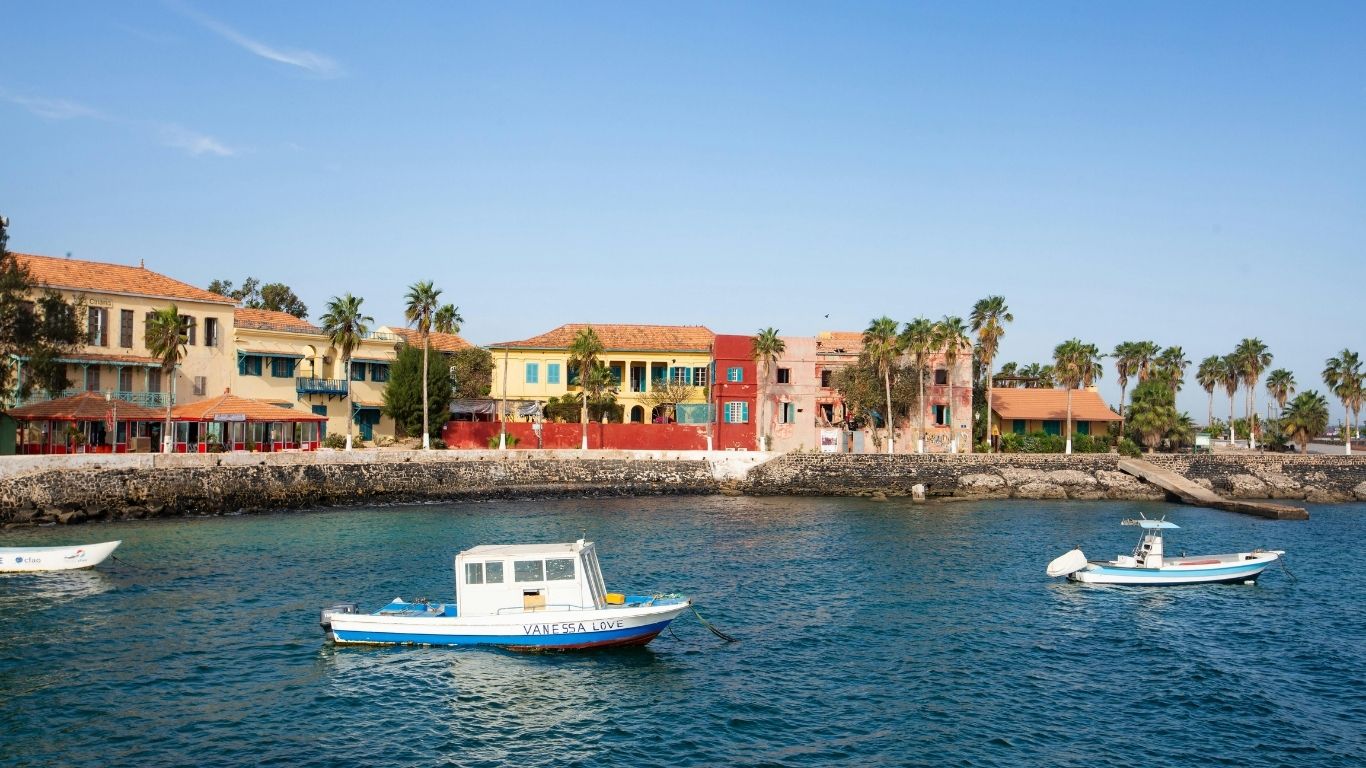


Just a twenty-minute ferry ride from the port of Dakar, Gorée Island invites you into a place where history speaks quietly, but never leaves you unmoved.
Recognized as a UNESCO World Heritage Site, the island bears witness to three centuries of Atlantic history through its weathered colonial architecture and cobbled lanes. At the heart of the visit lies the Maison des Esclaves, a former private residence turned point of departure for enslaved people, where the famous "Door of No Return" opens directly onto the ocean, one of the most poignant sights in West Africa.
Should you wish to wander a little further, small artists' workshops and quiet corners of the island reveal a Gorée that lives on in its people as much as in its stones.
Recognized as a UNESCO World Heritage Site, the island bears witness to three centuries of Atlantic history through its weathered colonial architecture and cobbled lanes. At the heart of the visit lies the Maison des Esclaves, a former private residence turned point of departure for enslaved people, where the famous "Door of No Return" opens directly onto the ocean, one of the most poignant sights in West Africa.
Should you wish to wander a little further, small artists' workshops and quiet corners of the island reveal a Gorée that lives on in its people as much as in its stones.